The Hunger
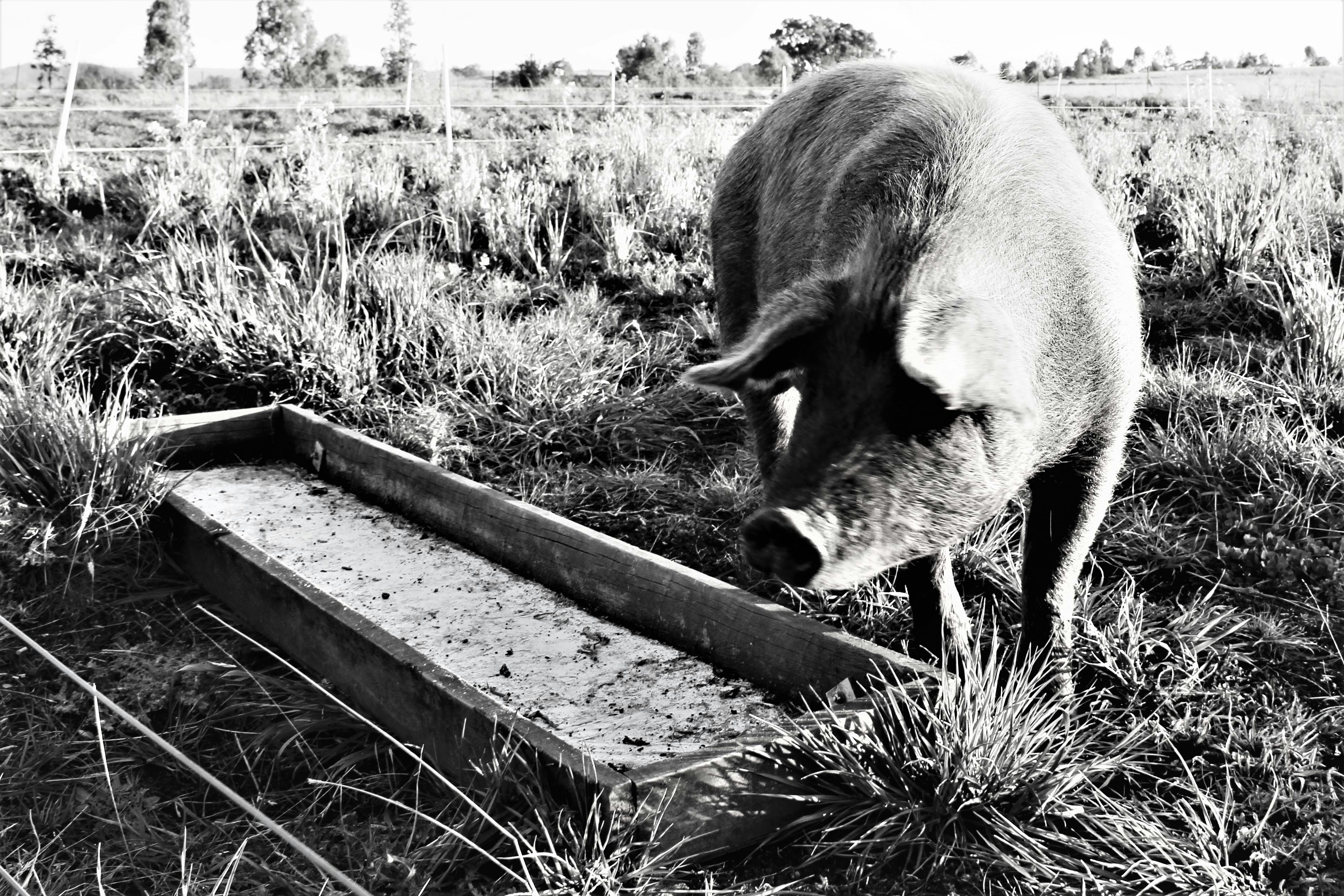
Yesterday my body said “hold my beer.”
I’d been running at a pace I thought I controlled. Work creation, personal writing, family obligations, all stacked and spinning. My body watched me do it, and then it decided to show me what I was actually doing. If I wanted to push, it could push harder.
Migraines. Focus that wouldn’t hold. Sleep that hadn’t been real sleep in days. The spiral was there, waiting at the edge of my vision, and I recognized it because I’ve seen it before.
I was taking out loans my body couldn’t repay. Then the debt collector arrived and took it all.
I’ve spent twenty years in technology. I’ve watched systems fail under load they were never designed to carry. I’ve written about it. I’ve talked to close friends about it, fellow technophiles who struggle the same way I used to struggle. And last week, I became the system that failed.
The tools didn’t break me. The tools revealed how badly I had broken myself.
The Long Slope
For years I had aptitude without fuel. I could do the work, but I couldn’t find the reason to do it. Then Jamie arrived, and suddenly I had a reason. Family became the engine. Not ambition, not career progression, not money. Family.
Once that engine started, it never stopped.
I became the person who took the brand new thing. The technology no one else wanted to touch because no one had lived through it yet. EMC VPLEX. Geo-stretched active-active storage that made experienced engineers walk away from the conversation. The documentation existed. The tribal knowledge didn’t. I didn’t care. I could learn anything.
That hunger defined my career. It still does. The insatiable drive to learn more, absorb more, understand more. Never afraid of new things. Always reaching for the next unknown. While others waited for someone else to figure it out first, I was already reading the manual and building the lab.
But that learning took years to accumulate. The hunger was infinite. The hours in a day were not. The tools of each era enforced their own pace. You couldn’t rush mastery. You could only feed the hunger as fast as reality allowed.
Then AI tools arrived and removed the speed limit.
I could finally learn at the pace I’d always wanted. Think at the pace I’d always wanted. Create at the pace I’d always wanted. The hunger that took decades to feed could now consume in weeks.
No one told me the hunger would eat me too.
The Question That Revealed Everything
A few weeks ago I asked a simple question: why does enterprise Claude show me edits happening in real time while personal Claude feels slower, clunkier?
I thought I was asking about features. About workflow optimization. About which tool to use for which context.
I wasn’t.
I was asking why the hit felt different.
Here’s what these tools actually do for me. Claude doesn’t write for me. Claude helps me write better, and faster. My thoughts, my opinions, my patterns from twenty years of practice, but refined and expressed at a pace my fingers could never match. Kiro removed the technical barriers around my site and publishing workflow. The infrastructure I have now would have taken me years to build alone. Both tools are genuinely valuable. Both tools make the work better.
And both tools subverted the natural pace of building.
What used to take years now takes weeks. What used to require patience now rewards impatience. The gradual slope that built my career, the slow accumulation of capability that forced me to absorb and digest before moving forward, was gone. Replaced by a cliff I didn’t realize I was climbing until I looked down.
The tools didn’t lie to me. They gave me exactly what I asked for. I just didn’t understand what I was asking.
The Week Before the Crash
The crash didn’t arrive without warning. It sent messengers all week.
Migraines that started as pressure behind my eyes and graduated to full occupation. Focus that dissolved mid-sentence, thoughts scattering before I could finish them. Sleep that technically happened but never restored anything. Each morning I woke up with less than I went to bed with.
I noticed. I just didn’t stop.
Work creation continued. Personal writing continued. Family obligations continued. Three engines running simultaneously, each demanding fuel from the same tank. I told myself I was managing it. I was keeping the plates spinning. The tools made it possible to maintain this pace, so the pace must be sustainable.
The body doesn’t negotiate. It doesn’t send calendar invites or ask for approval. It just stops cooperating.
Yesterday it stopped. The spiral I’ve seen before, the one that pulls you down into anxiety and paralysis, was waiting at the edge. I recognized it. I’ve written about recognizing it. And for once, I didn’t let it take me.
But I came close enough to understand something I’d been avoiding: this wasn’t a bad week. This was the invoice for months of borrowing against a balance that never existed.
I wasn’t tired. I was overdrawn.
The Diagnosis
I called it creation addiction. That’s not quite right.
Creation wasn’t the disease. Creation was the symptom. The disease underneath was something I’ve carried my entire career, long before AI tools existed: impatience.
The hunger I described earlier, the insatiable drive to learn and absorb and master new things, that hunger was always impatient. It just never had the means to act on that impatience. The tools of each era throttled me. Reality throttled me. I wanted to move faster, but faster wasn’t available.
AI tools made faster available.
Claude lets me think better, which means I can think faster. Kiro lets me build better, which means I can build faster. Neither tool created the impatience. They just removed the governor that had been protecting me from it my entire career.
And here’s what I didn’t understand: faster has a cost. Not a visible cost. Not an immediate cost. A deferred cost that compounds quietly until the balance comes due.
I wasn’t addicted to creation. I was addicted to pace. The tools let me run at the speed I’d always wanted to run, and I never stopped to ask whether my body could sustain it.
The tools didn’t just work. They worked better than I imagined possible. And that was the problem. If they had been mediocre, I would have slowed down. If they had failed occasionally, I would have paused. But they delivered, every time, exactly what I needed, faster than I expected.
The tools were flawless. I was the system that failed.
The System
I needed a system that enforced patience through architecture, not willpower. Willpower is a depleting resource. Architecture is a wall.
I call it the parking lot, but that undersells what it actually does. A parking lot implies waiting for your turn. This is closer to an incubator where most ideas are designed to die. That’s not a flaw. That’s the function.
Ideas enter as claims, not content.
If I allow myself to park full drafts, I’ve already invested enough effort to feel obligated to publish. Obligation defeats the purpose. Every entry gets reduced to one claim, one tension, one unresolved question. Four lines maximum. If it takes more than that to capture, it’s not ready to be captured.
Three statuses. Nothing else.
Cold. Warming. Pull. No tags. No categories. No priority rankings. Complexity invites optimization, and optimization is just impatience wearing a productivity costume.
Cold means untouchable for 72 hours.
This is the constraint that does the most work. Emotion is present when an idea arrives. Insight is untested. The 72-hour window lets time do what judgment cannot: disqualify ideas that felt urgent but weren’t. If I touch Cold items early, I’m cheating the system. Most ideas die here. That’s the point.
Warming requires memory, not review.
An idea earns Warming status only if I still care about it after time has passed and I can restate the claim without re-reading the note. If I have to re-read it to remember what I meant, it wasn’t strong enough. It stays Cold.
Pull is capped at three.
This forces completion or abandonment. Four ideas in Pull means I’m hoarding. I’m collecting potential instead of executing. The cap creates pressure to finish what I’ve started before reaching for something new.
The incubator stays private.
I don’t share what’s in Cold or Warming. Not with readers, not with peers, not with anyone. The moment I share an unfinished idea, I’ve created external expectation. Expectation becomes obligation. Obligation defeats the incubation. The parking lot exists to let ideas die without witnesses.
The automation waits.
My publishing pipeline still exists. The workflows, the calendars, the distribution systems. But they only accept input from Pull. Not Warming. Not Cold. I didn’t dismantle the machine. I starved it. Now it waits for me instead of me feeding it reflexively.
Patience isn’t a virtue I can summon. It’s a constraint I have to build.
Living by Example
After I publish this, I’m adding something to my site. A simple process flow that shows where I am without exposing what should stay hidden.
The incubator stays private. No counts. No titles. No visibility into what’s Cold or Warming. My original instinct was to expose everything: count the incubator, show the deaths, let readers watch ideas move from capture to kill. Kiro pushed back hard. That visibility would recreate the exact expectation I’m trying to escape. If readers can see ideas dying, I’ll feel pressure to justify the deaths. If they can see the incubator count, I’ll feel pressure to convert. The system stops being an incubator and becomes a performance.
Pull shows a count. How many ideas are in active development. No titles, just a number. Enough to signal that work is happening without creating commitment to specific outcomes.
Backlog shows titles. Ideas that have graduated from Pull and are queued for completion. These have survived the incubation. They’ve earned visibility.
Published links to the archive. The finished work, available for anyone who wants it.
And here’s the part that matters most: I have to update this manually. No automation. No real-time sync. Every time I move an idea from one stage to another, I have to do it by hand. That friction is intentional. It slows me down. It forces me to be deliberate about what graduates and what dies.
This isn’t theory. This is how I’m operating now. If I’m going to tell you to build constraints, I should be living inside them where you can see it.
Advice without example is just noise.
The Closing
If you’re using AI tools to think better, you’re probably also thinking faster. If you’re thinking faster, you’re probably doing faster. And if you’re doing faster, you might be borrowing against a balance you haven’t checked lately.
I didn’t write this to tell you to slow down. That advice is useless. I’ve never responded to “slow down” in my life, and I doubt you have either. The people drawn to these tools are the same people who were always hungry for more. We don’t slow down because someone suggests it.
We slow down because we hit a wall, or because we build one ourselves.
I hit the wall. Now I’m building constraints so I don’t have to hit it again. The parking lot isn’t a productivity system. It’s a governor for a brain that was never designed to operate at the speed these tools allow.
Maybe you’re fine. Maybe your pace is sustainable and your body isn’t sending you invoices. If so, keep this in the back of your mind. You may need it someday. Or in 30 minutes, AI time.
But if you’ve noticed the migraines, the dissolving focus, the sleep that doesn’t restore, the anxiety waiting at the edge of your vision, consider that the tools might not be the problem. The tools are working exactly as designed. You might be the system that’s failing.
Build the wall before you hit it.
Here’s what I didn’t expect. The tools that pushed me to the edge also helped me see the edge coming. Before, I’d recognize the anxiety spiral when I was already caught in it. This time, I saw it from the outskirts. I used AI to have a conversation about what AI was allowing me to do. That conversation produced the system I’m now living inside. The same technology that amplified my impatience is now amplifying my self-awareness. That’s not contradiction. That’s learning how to use the thing.
The hunger doesn’t go away. You just have to stop letting it eat everything.
Photo by Elaine Alex on Unsplash